
Solved exercises of Atomic and Molecular Spectroscopy
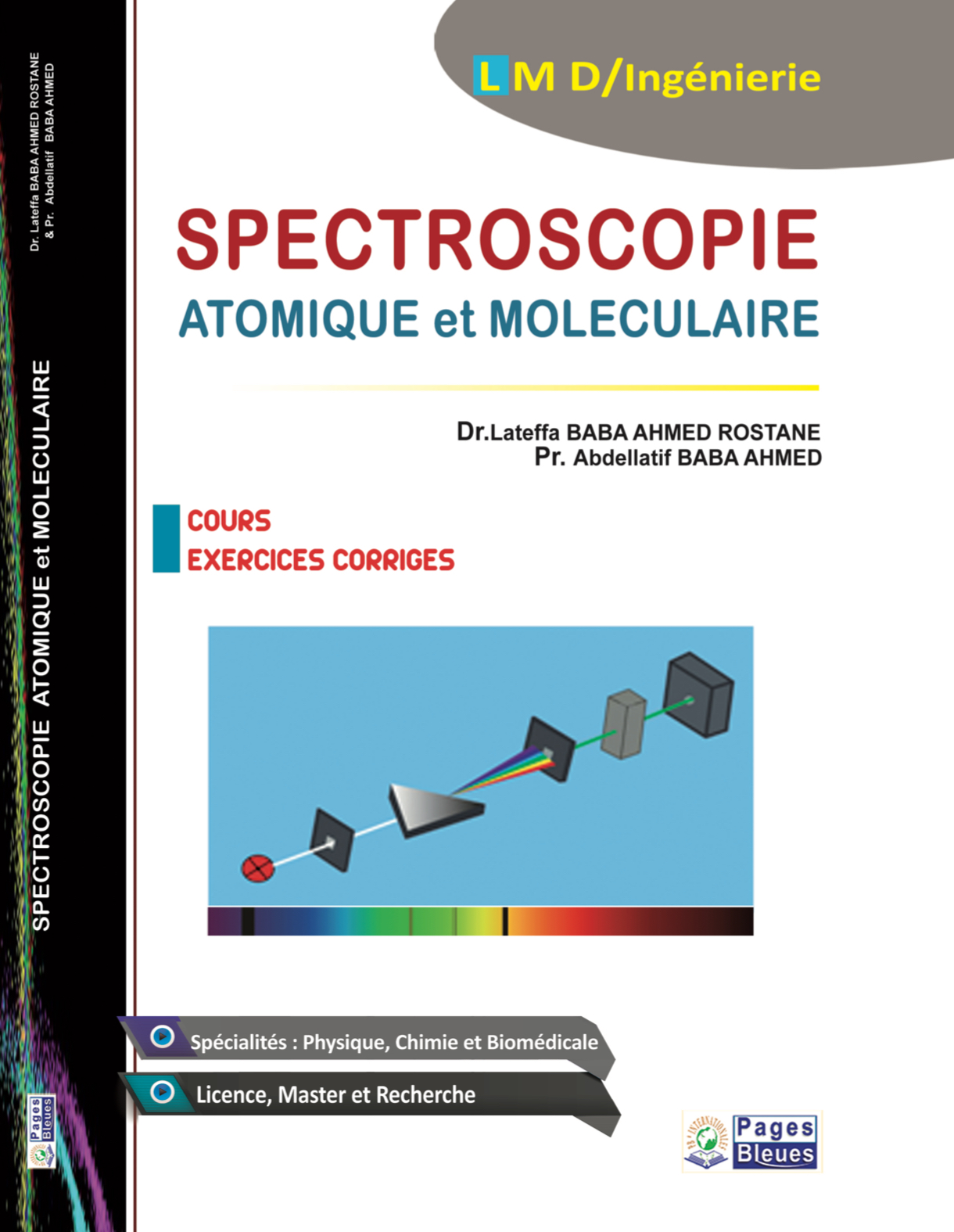
Before explaining the educational reasons which led me to write this book, I took the initiative of translating into English the exercises and problems section of my book entitled "Atomic and Molecular Spectroscopy", published in French by the "Pages Bleues" publishing house. The book contains six chapters, each preceded by a brief review of the course, which is certainly not sufficient to treat the exercises. I therefore recommend that students consult the French version of “Spectroscopie atomique et moléculaire”. This initiative is part of the introduction of the English language into scientific disciplines at university. Having completed all my university studies in French, and having taught at university in French for almost fifty years, I'm fully aware of my limitations in mastering the English language. To carry out my project, I used "Deepl.com Translation free version", one of the many free translation programs available on the Internet. This software seems to me to be the best adapted to the specificities of the scientific field of scientific English. Faced with the almost total absence of books on atomic and molecular spectroscopy (courses and tutorials), and in response to students' desire to have a working document, I decided to clean up all my notes. The content of this book is strictly in accordance with the official physics degree program taught in Algerian universities. This manuscript is the fruit of several years of teaching in atomic physics at the University of Science and Technology U.S.T.H.B, Bab-Ezzouar (Algiers-Algeria). It is particularly aimed at students in the second year of the L.M.D bachelor's degree in fundamental physics. It will be very useful for students in the third year of the L.M.D. in fundamental physics, as well as in the first year of the various master’s degrees in radiation physics. This document provides students with the opportunity to apply the concepts acquired in the course and to check their knowledge. I've deliberately opted for a work of the exercises and problems with solutions type, rather than exercises and problems with or without answers. My experience has shown me that, in the absence of certain comments and calculation intermediates, students are often unable to reconstruct the solution. A collection of corrected exercises and problems always presents a danger for the user: that of falling into ease, of consulting the answers before having sufficiently searched the solution, and also of working on the exercises and problems before having studied the course. I suggest that students use this document as a tool for perfecting their knowledge of the course. The usefulness of such a document is strictly conditioned by the use the student makes of it. Great care should be taken with numerical applications, units and, in particular, orders of magnitude. Students are advised to pay particular attention to the physical meaning whenever possible. Finally, I thank in advance all those who would like to point out mistakes and errors and send me their comments, because I am aware that, in its current state, the book is not perfect. Those who wish to send me their remarks, comments or suggestions are invited to do so at the following address.
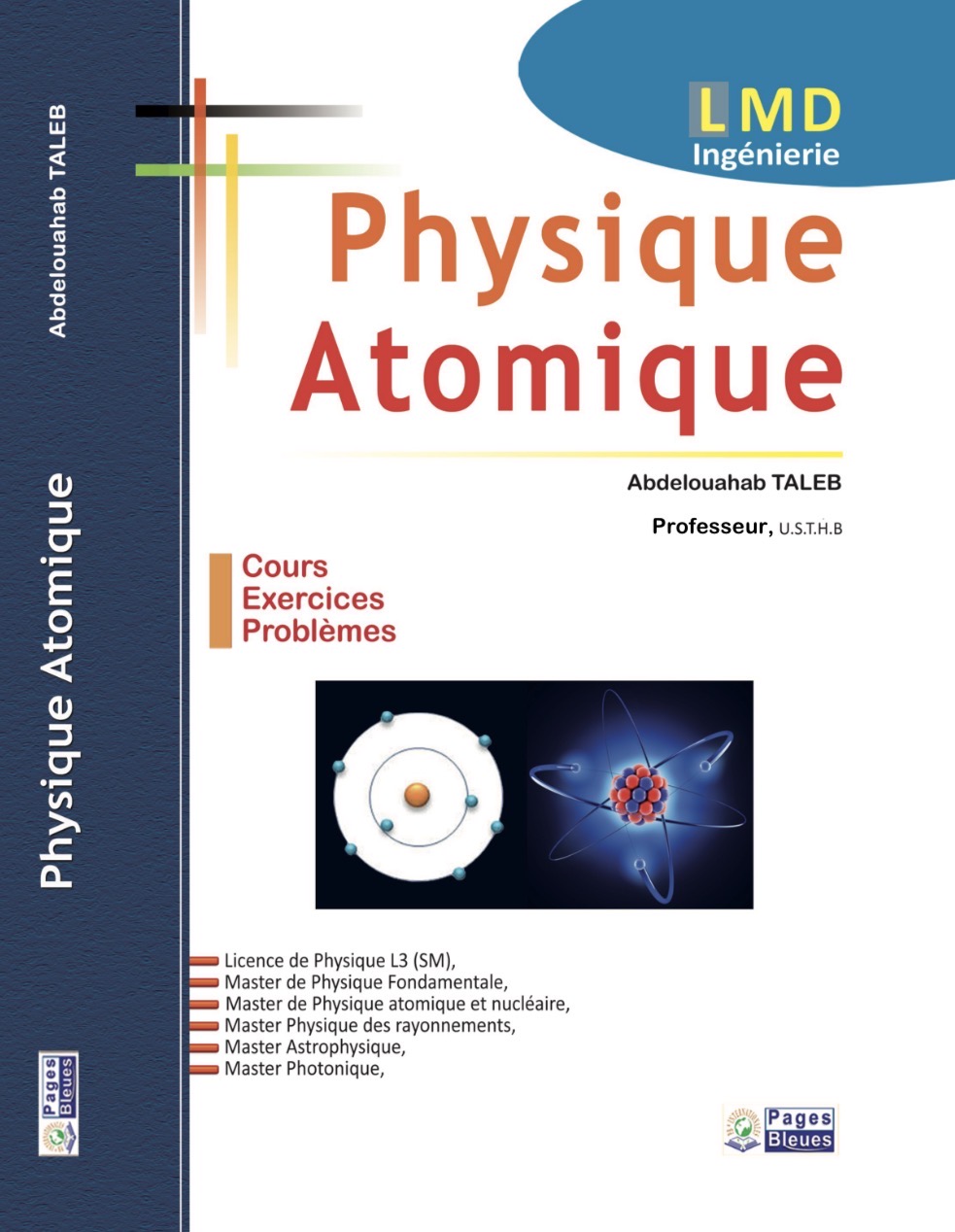
Autres livres de : A Taleb


Livres dans la même catégorie
Avis des lecteurs
Aucun avis pour le moment.