Digital Logic and computer organization
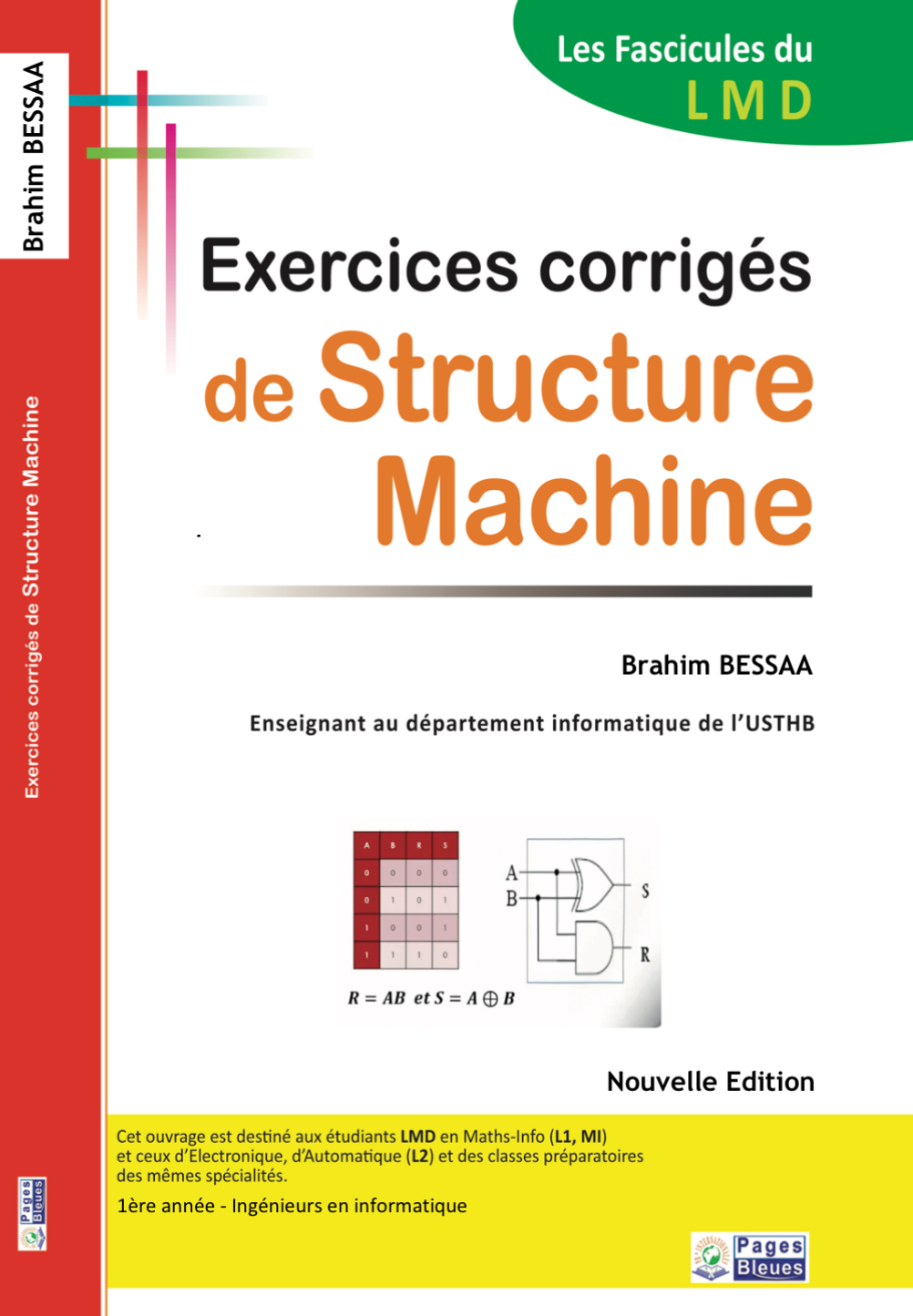
The course on “Computer Architecture” is intended for students in the first year of their university journey, particularly those in the field of Computer Science. This course delves into the fundamental operational principles of computers. It equips students with an in-depth comprehension of the intricate organization of these machines at a low level. This book, titled 'Digital Logic and Computer Organization: Exercises with Solutions,' serves as a complementary resource to fortify this comprehension. Through a diverse array of exercises spanning the chapters of the course, the book reinforces key concepts. It comprises over 120 exercises accompanied by meticulously crafted solutions. The content is thoughtfully structured across seven chapters, aligned with the curriculum of the “Computer Architecture” module. Chapter 1: 'Number Systems' encompasses exercises centered around conversions between various number systems, as well as arithmetic operations within B-based systems. Chapter 2: 'Data Representation in Computers' presents exercises that delve into distinct methodologies for representing numeric (integer and real) as well as alphanumeric data. Additionally, it addresses codes such as DCB, Gray, and ASCII. Chapter 3: 'Boolean Algebra and Logic Functions' delves into Boolean Algebra, elucidating topics like function representation through truth tables, Karnaugh tables, algebraic simplification, and canonical forms. Chapter 4: 'Combinational Logic Circuits' offers an array of exercises that explore the representation of logic functions via logic circuits. Furthermore, it tackles common combinational circuits like Decoders and Multiplexers Chapter 5: 'Sequential Logic Circuits' introduces flip-flops and sequential circuits. The chapter emphasizes function representation through state diagrams, providing insight into state machines. Chapter 6: 'Memory Design' delves into the inner workings of memory components such as ROM and RAM. The focus is on internal representation and organizational diagrams. Chapter 7: 'Basic Computer Architecture' serves as the culmination of the book, featuring practical exercises that elucidate instruction execution cycles. It sheds light on the array of registers involved during program execution. This book is designed to be an invaluable companion to the 'Machine Structure' course, aiding students in grasping the intricate interplay of digital logic and computer organization. Happy learning! Dr Brahim bessaa