
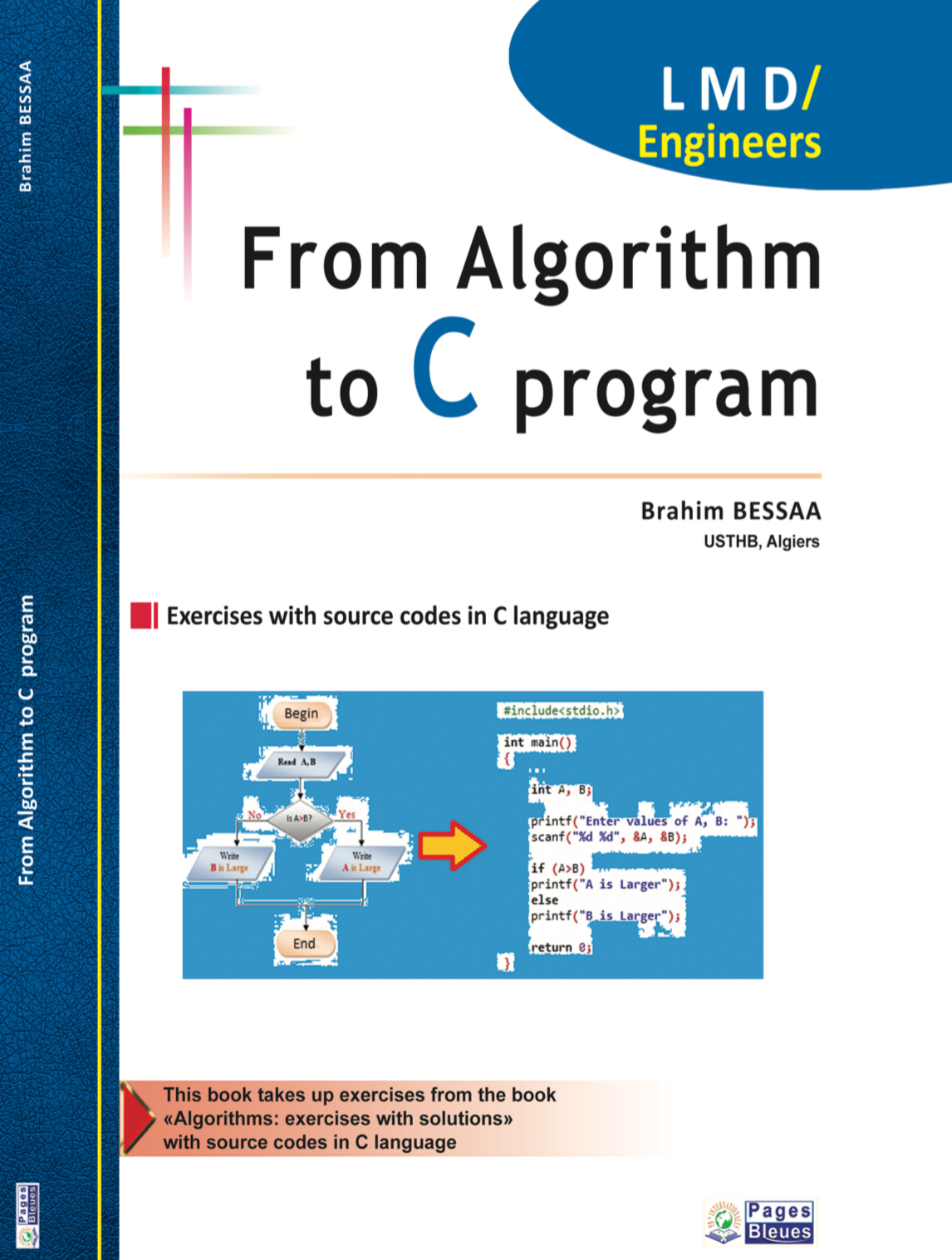
The C language : from algorithm to program
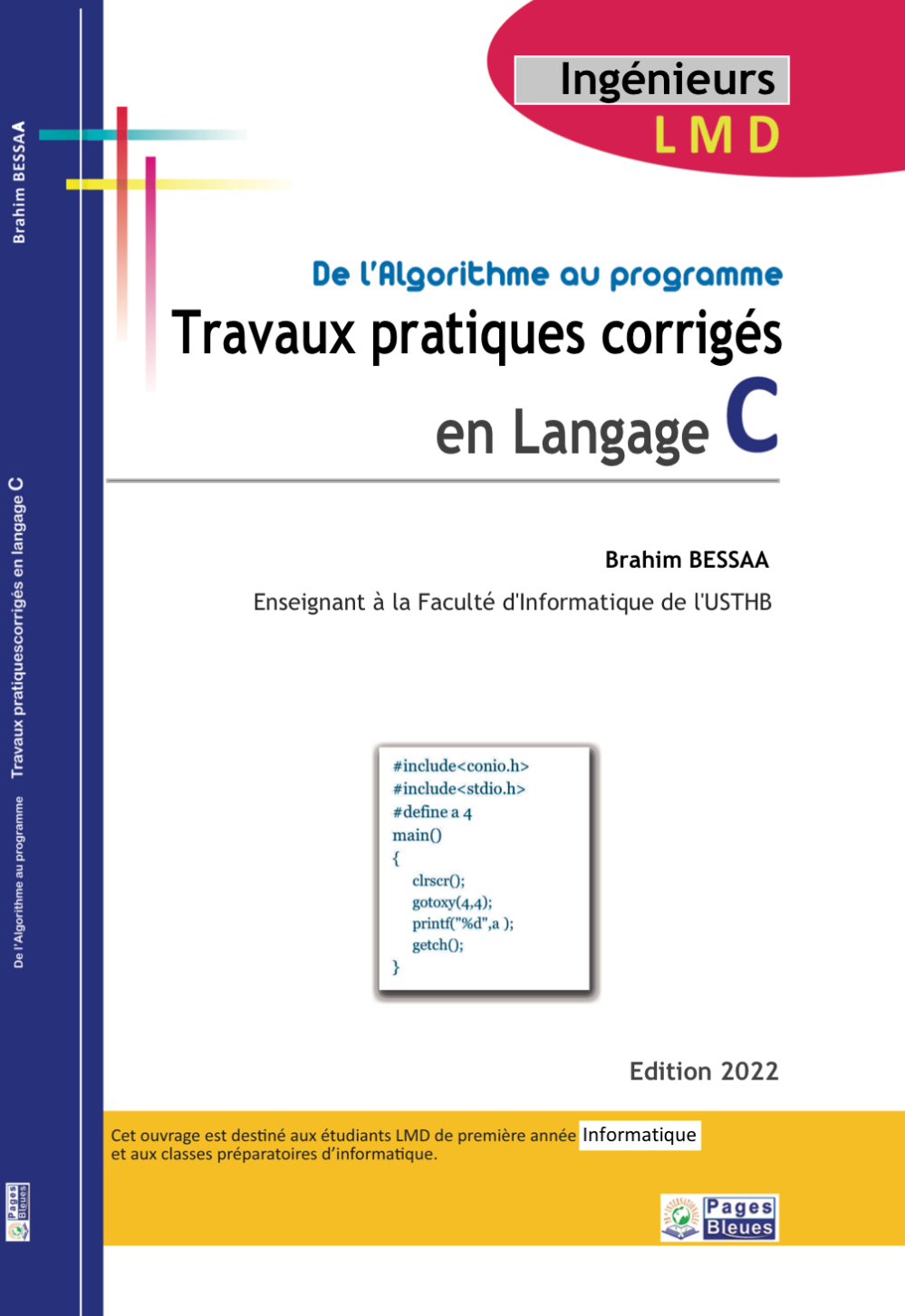
This work does not teach all the techniques of the C language, nor does it claim to be an exhaustive work on the C language. It proposes, on the other hand, to be a pedagogical tool that teaches the basic algorithmic techniques through the C language. The algorithms module is taught in our universities independently of any programming language for the first years of the LMD system and the preparatory classes. The PASCAL or C languages are introduced in parallel in order to carry out practical work. Students find themselves in front of their machines without sufficient knowledge or experience in the use of languages, since it is the first time they approach the subject. And even when they are introduced to a language, this does not prevent them from having gaps regarding the correct use of the language tools, and they begin to grope their way toward obtaining results on screen. This can create a handicap for their future in the field of programming. We therefore believe that a pedagogical course on a language more or less close to human language, such as PASCAL, C, or C++ (core), will allow the student to properly assimilate the principles of programming by moving from an algorithm to a program, and offers the prospect of discovering other languages such as C++ (object-oriented), JAVA, and Python. This work corresponds to the program taught in universities and higher schools. The C language has become an obligatory passage for all fields and streams in science and technology, after having taken the algorithms module in which the student learns programming notions independently of any language. The division of the work into pedagogical units allows the student to follow the chapters progressively along with their assessments (practical work, questions, and corrected exercises). The teacher will find no difficulty in using our work as a course and tutorial support for the algorithms and C language programming curriculum. The work is thus divided into eleven chapters; each chapter is followed by a practical work session and a series of questions and corrected exercises. We draw the attention of users to the fact that all the examples and exercises in this work are compiled and executed using the recent version of the GCC compiler through two tools: CodeBlocks offline and GDB Debugger Online. Finally, we will gladly welcome any criticism, observation, and suggestion that will help improve this modest work. The Author Mr. BELAID
Autres livres de : Mc Belaid


Livres dans la même catégorie


Avis des lecteurs
Aucun avis pour le moment.